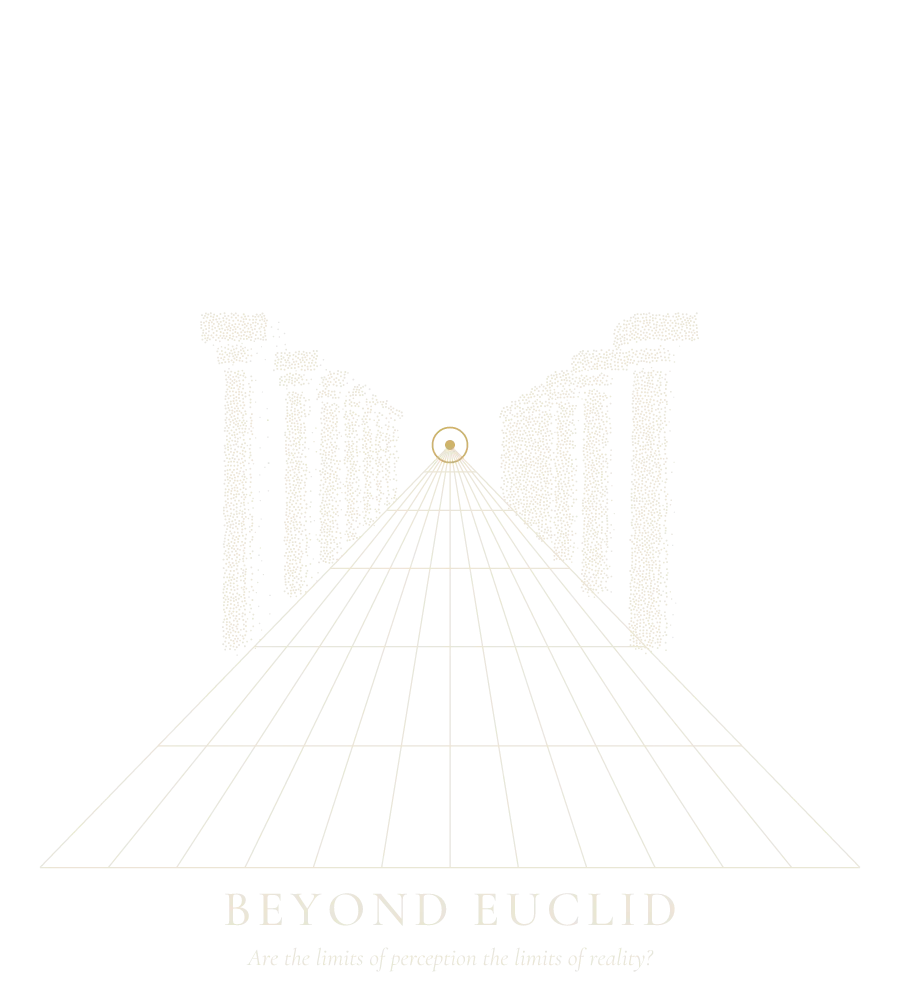
Artifact 004 · The Human Condition // 001
Beyond Euclid
Are the limits of perception the limits of reality?
- Composition
- Classical architecture folding through impossible space.
- Animation
- A colonnade folds over itself and continues.
- Character
- Vertigo, held calmly.
The idea
A colonnade recedes in perfect perspective, then folds back over itself like a page. The architecture is classical; the space it occupies is not.
For two thousand years Euclid’s geometry was assumed to describe space itself. In the nineteenth century, mathematicians showed other geometries were equally consistent, and Einstein showed physical space is one of them.
Sources & claims
- History
Lobachevsky and Bolyai published consistent non-Euclidean geometries in the 1830s.
- Science
General relativity (1915) describes gravity as the curvature of spacetime.
Every statement is labelled: History is documented, Science is current understanding, Interpretation is the artwork's reading, Speculation is imaginative.
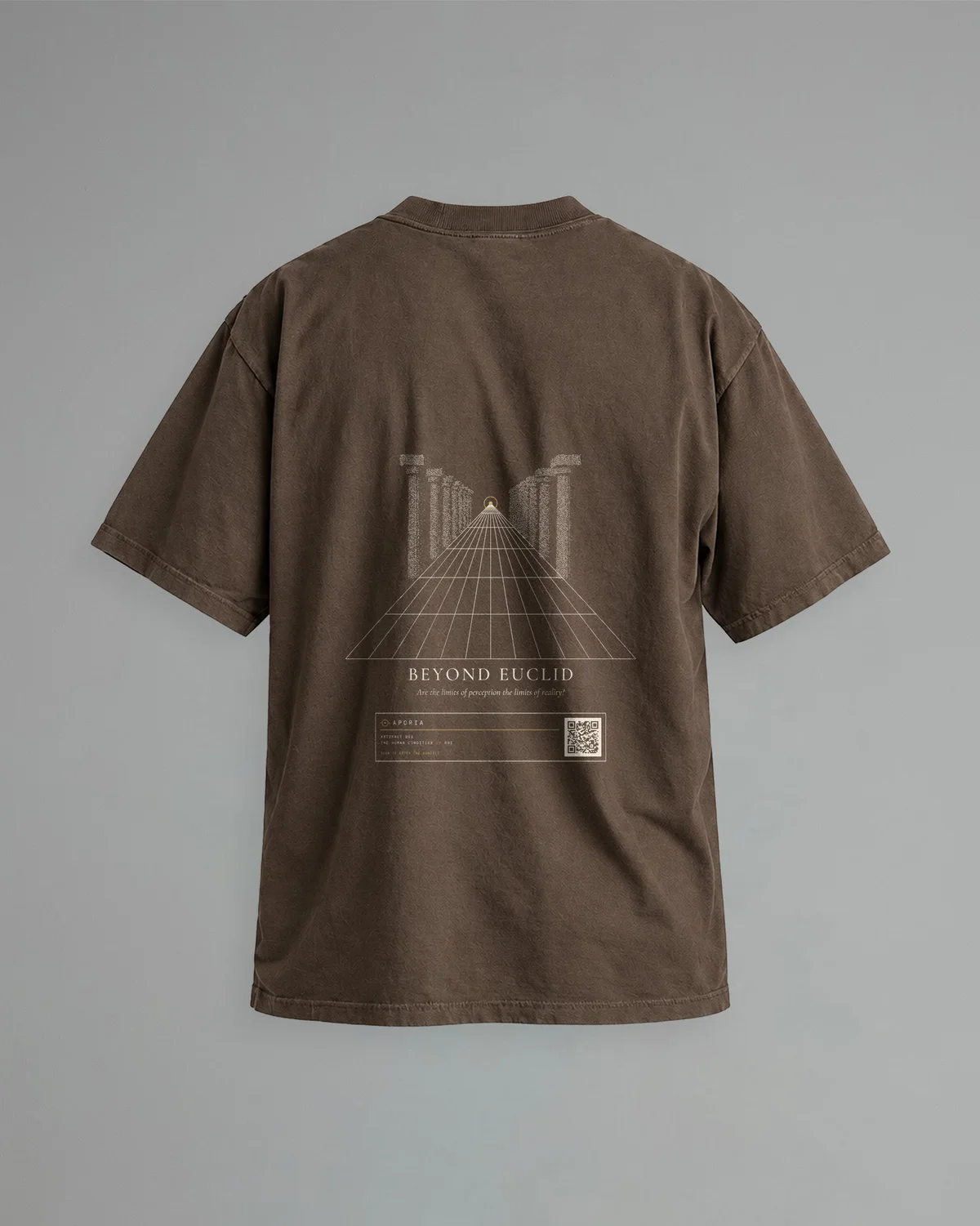
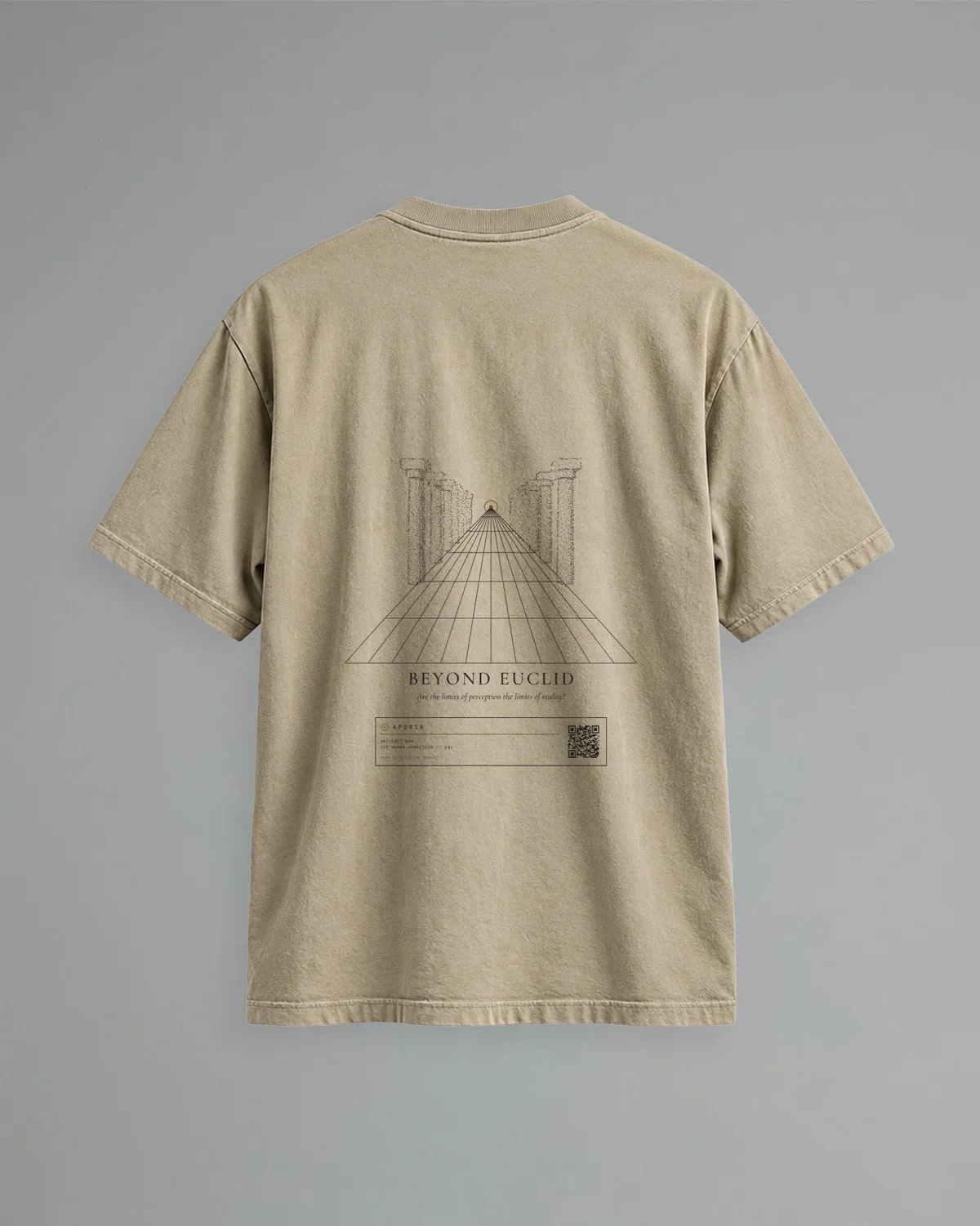
The physical artifact
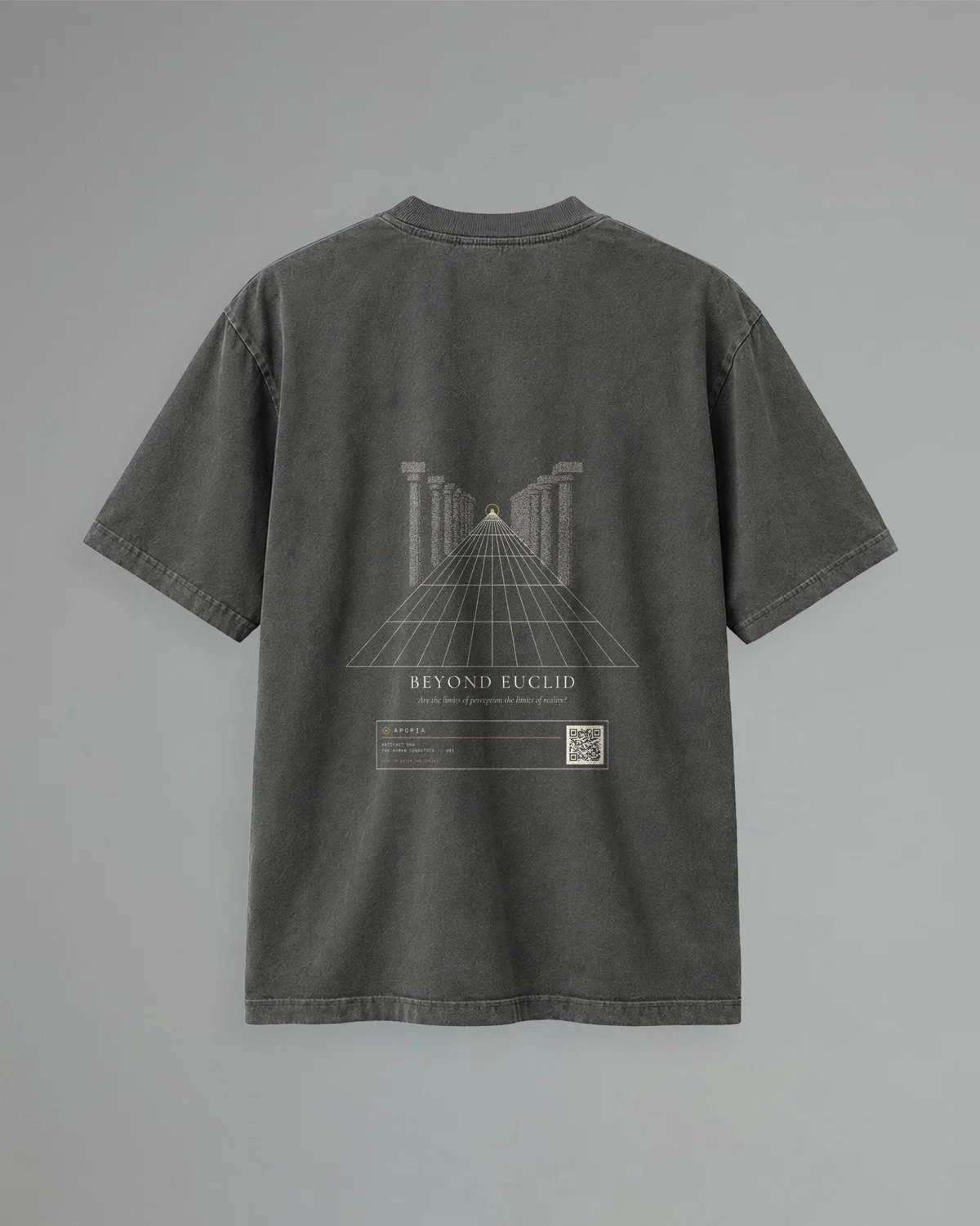
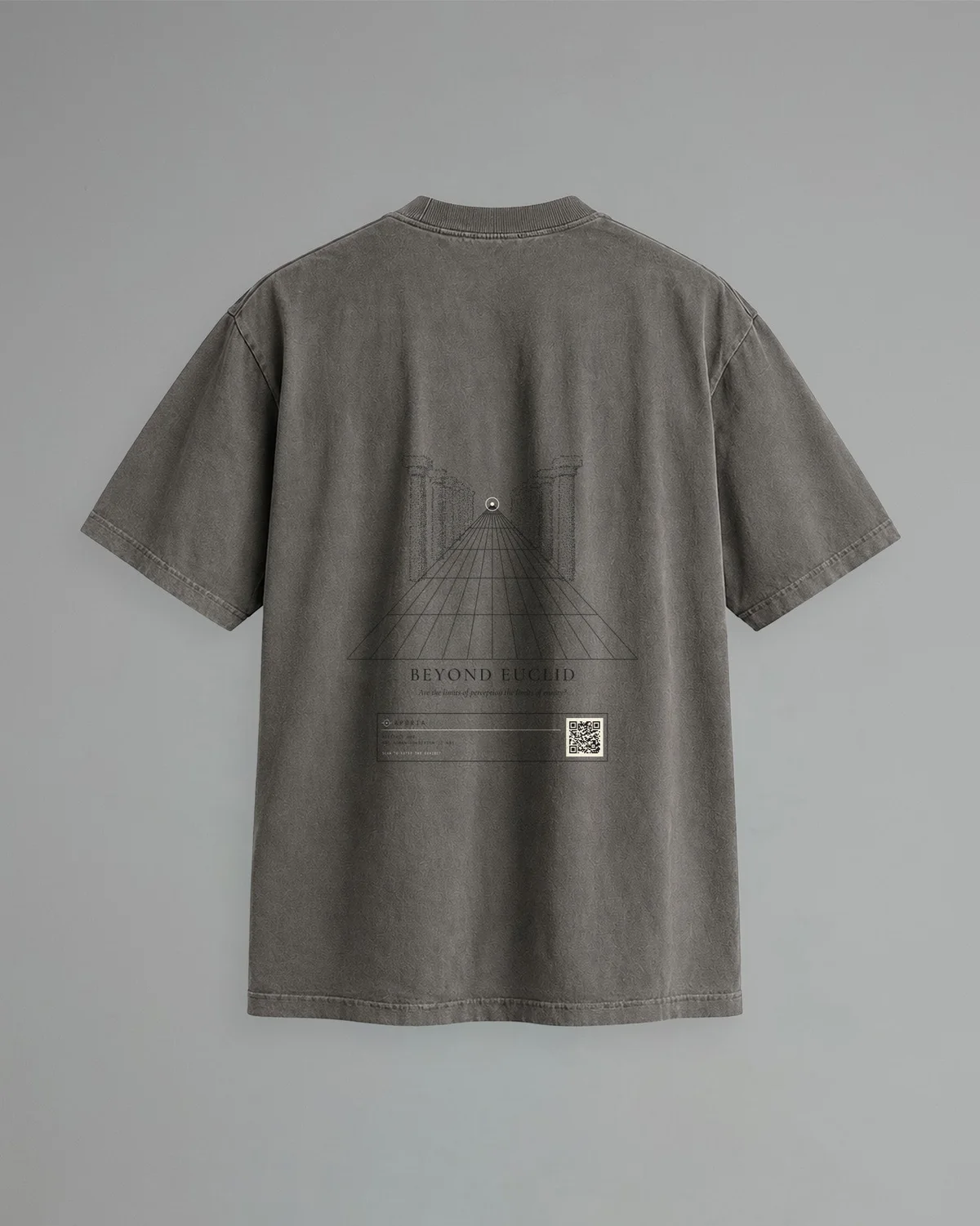
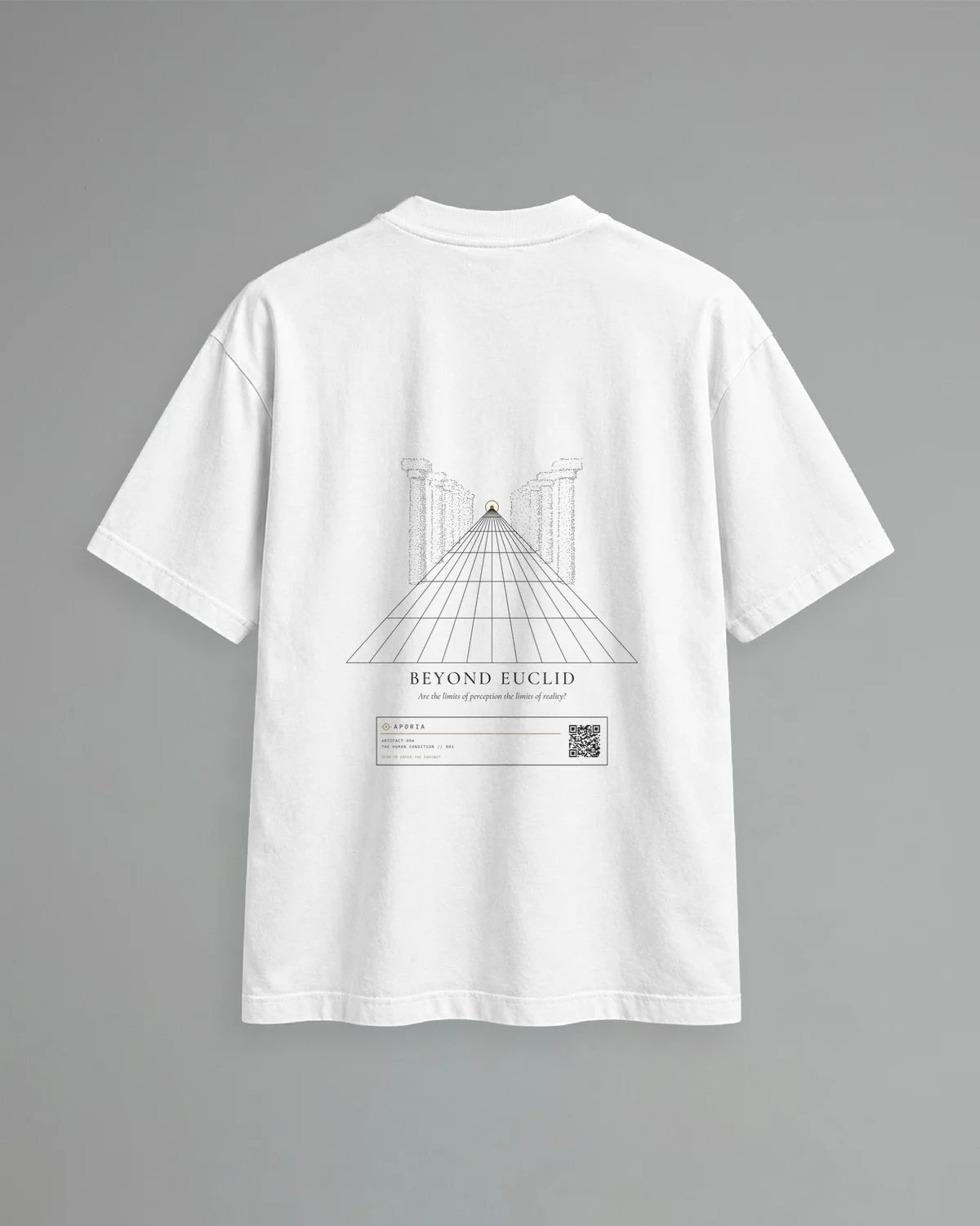
Printed large on the back. Marked small on the chest.
Heavyweight 7.5 oz garment-dyed cotton in a slightly oversized fit. The museum placard under the artwork carries a permanent QR code that opens this artifact's exhibit.