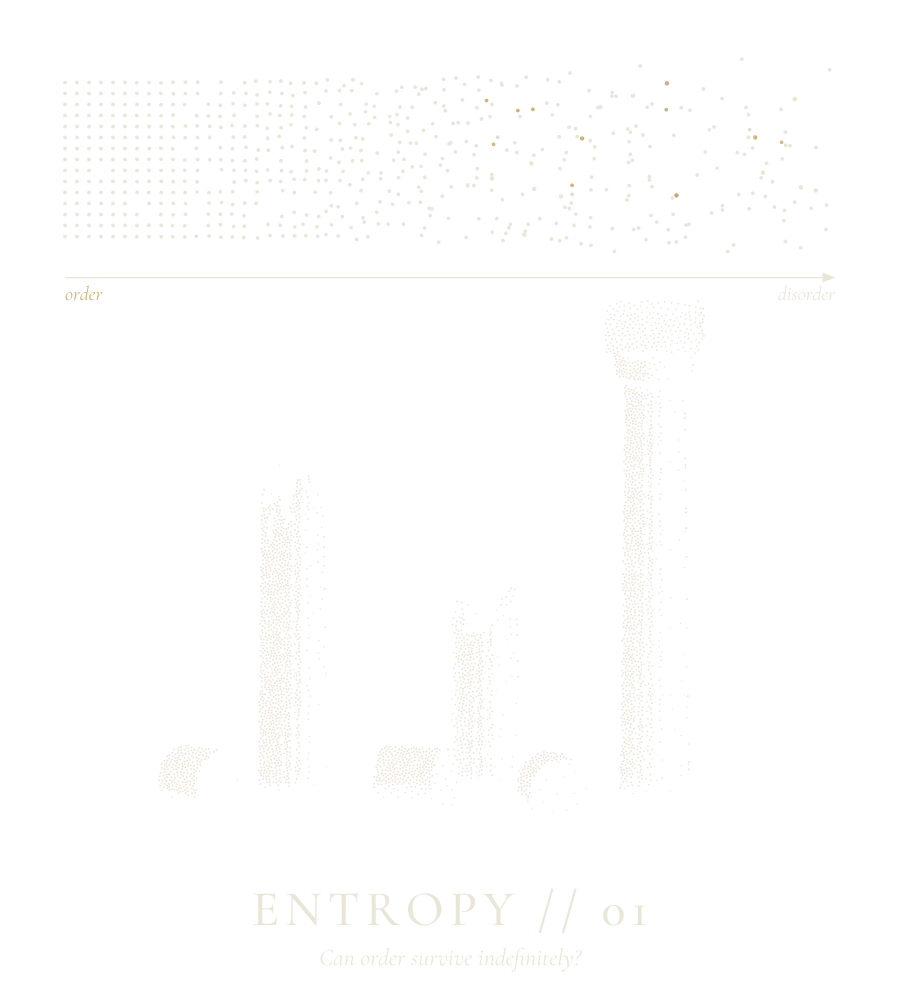
Artifact 005 · The Human Condition // 001
Entropy // 01
Can order survive indefinitely?
- Composition
- An ordered sculpture dissolving into chaotic particles.
- Animation
- The sculpture disintegrates; it never reassembles.
- Character
- Elegy.
The idea
A perfectly ordered form loses its edges one particle at a time. Nothing breaks it; the dissolution is simply more likely than the order.
The second law of thermodynamics says the total entropy of an isolated system never decreases. It may be why time has a direction at all.
Sources & claims
- Science
The second law of thermodynamics: in an isolated system, entropy does not decrease.
- History
Ludwig Boltzmann related entropy to the number of microscopic arrangements (1870s).
- History
Isaac Asimov's short story "The Last Question" (1956) follows humanity asking an ever-greater computer, across trillions of years, whether entropy can be reversed. Asimov called it his favourite of his own stories.
- Interpretation
Read with 006, The Creator Paradox: the end of order and the beginning of making may be the same question asked from opposite ends.
Every statement is labelled: History is documented, Science is current understanding, Interpretation is the artwork's reading, Speculation is imaginative.
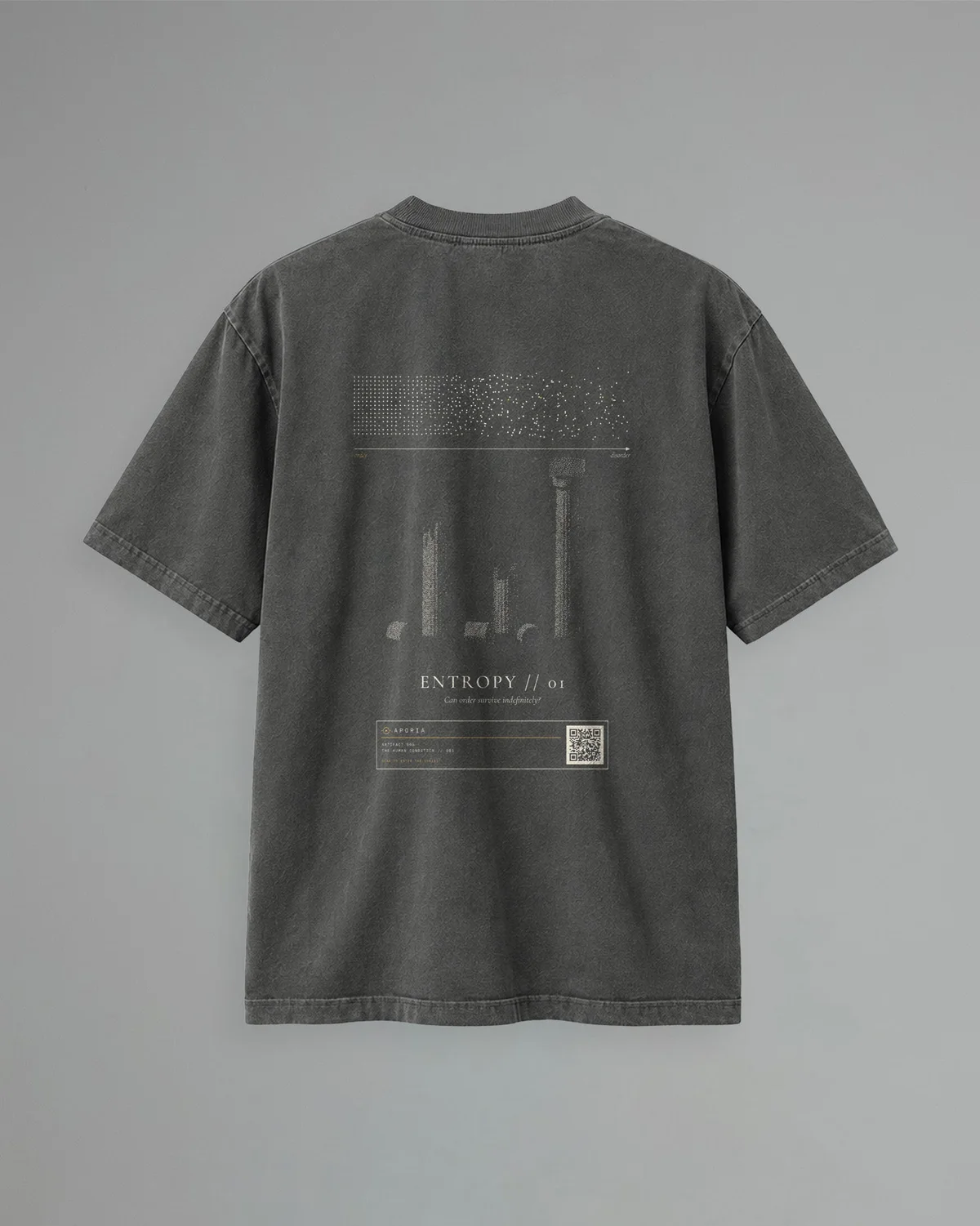
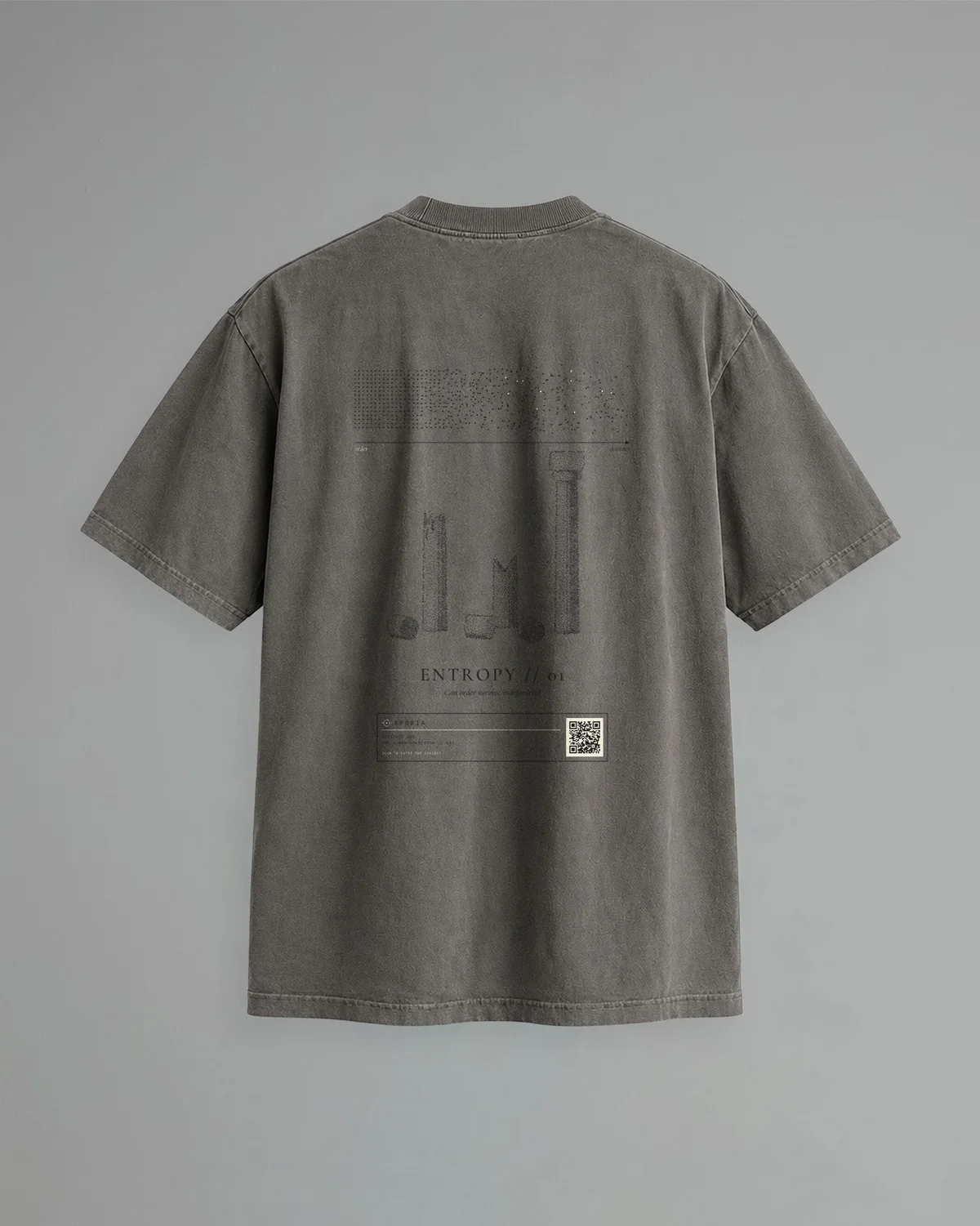
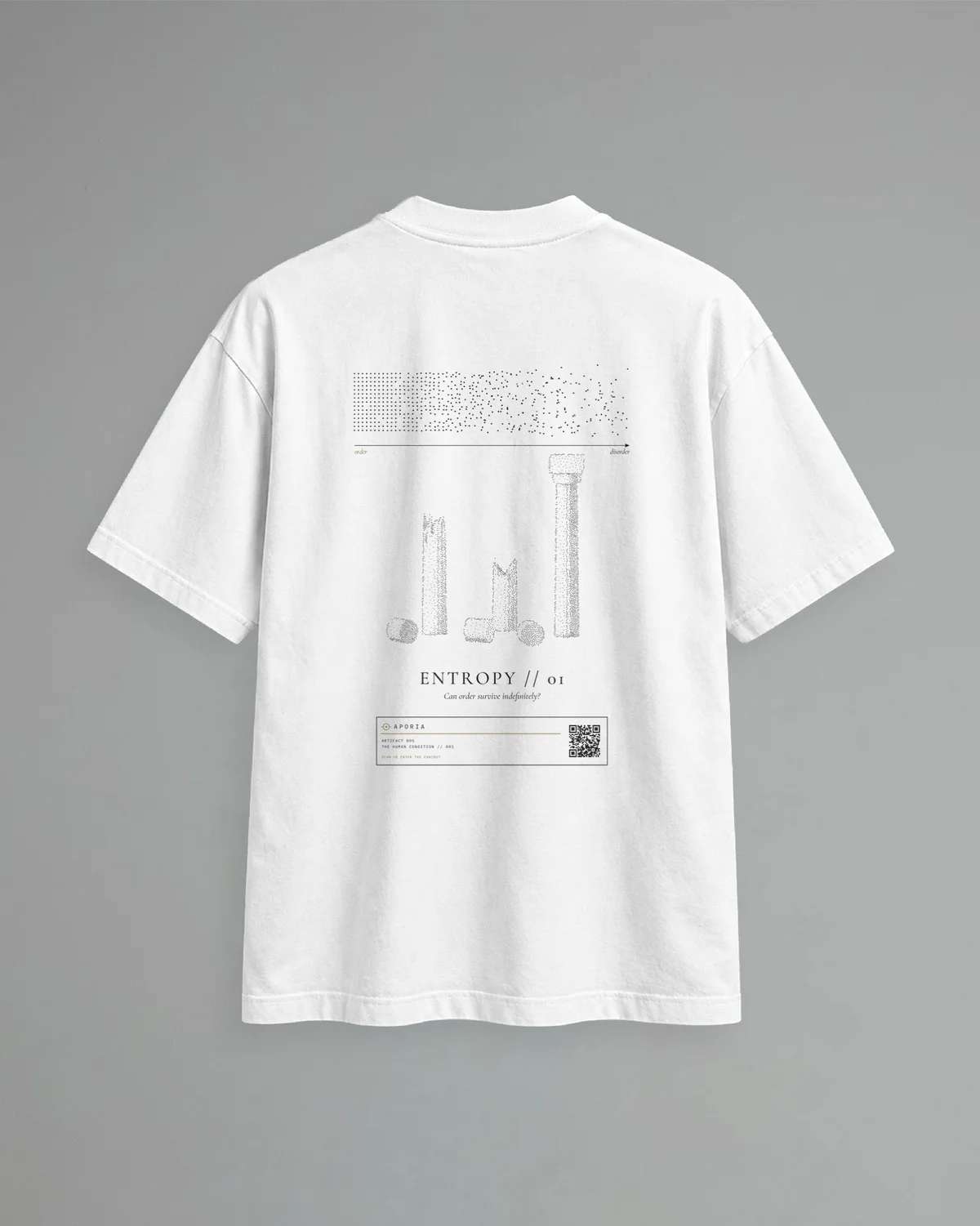
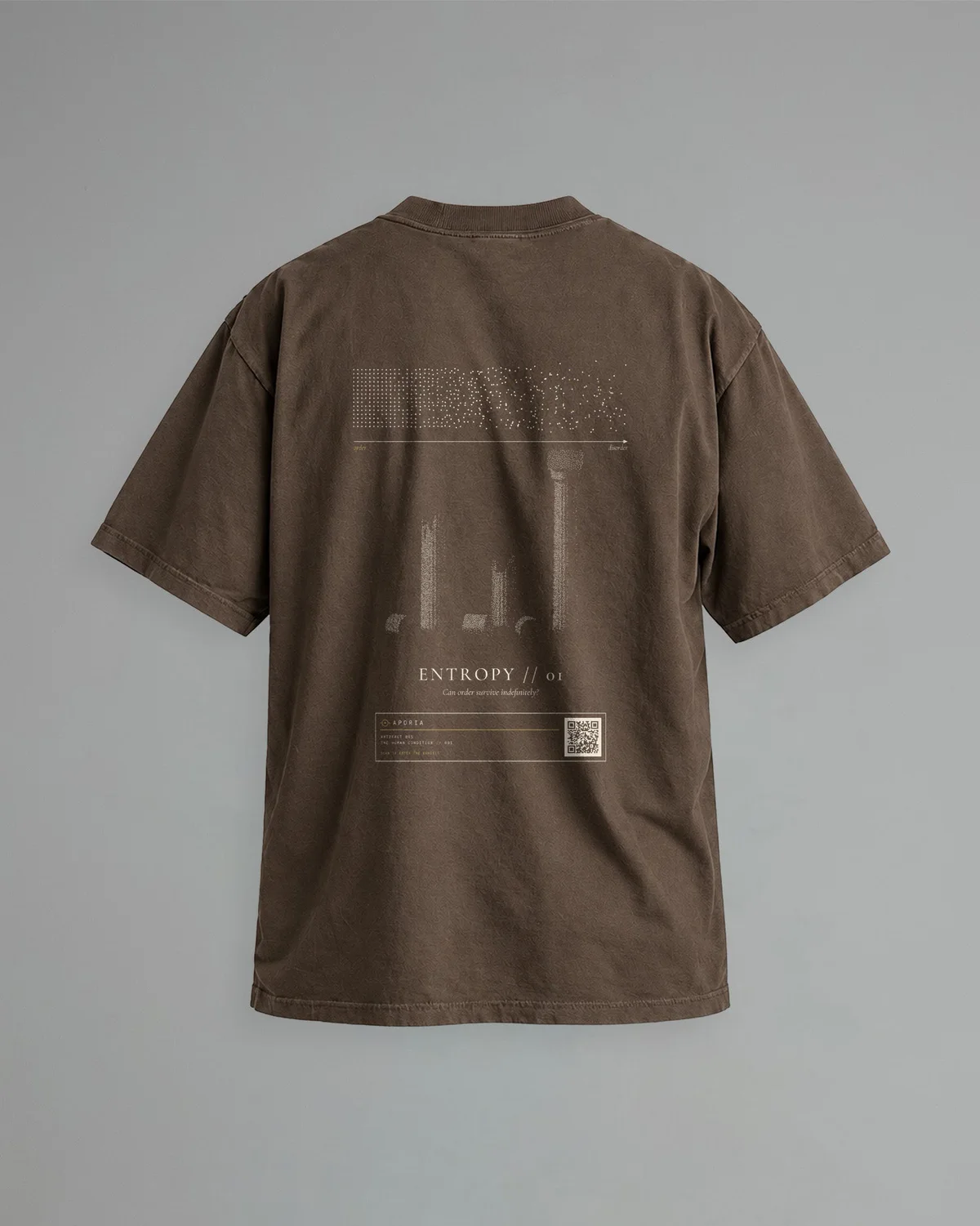
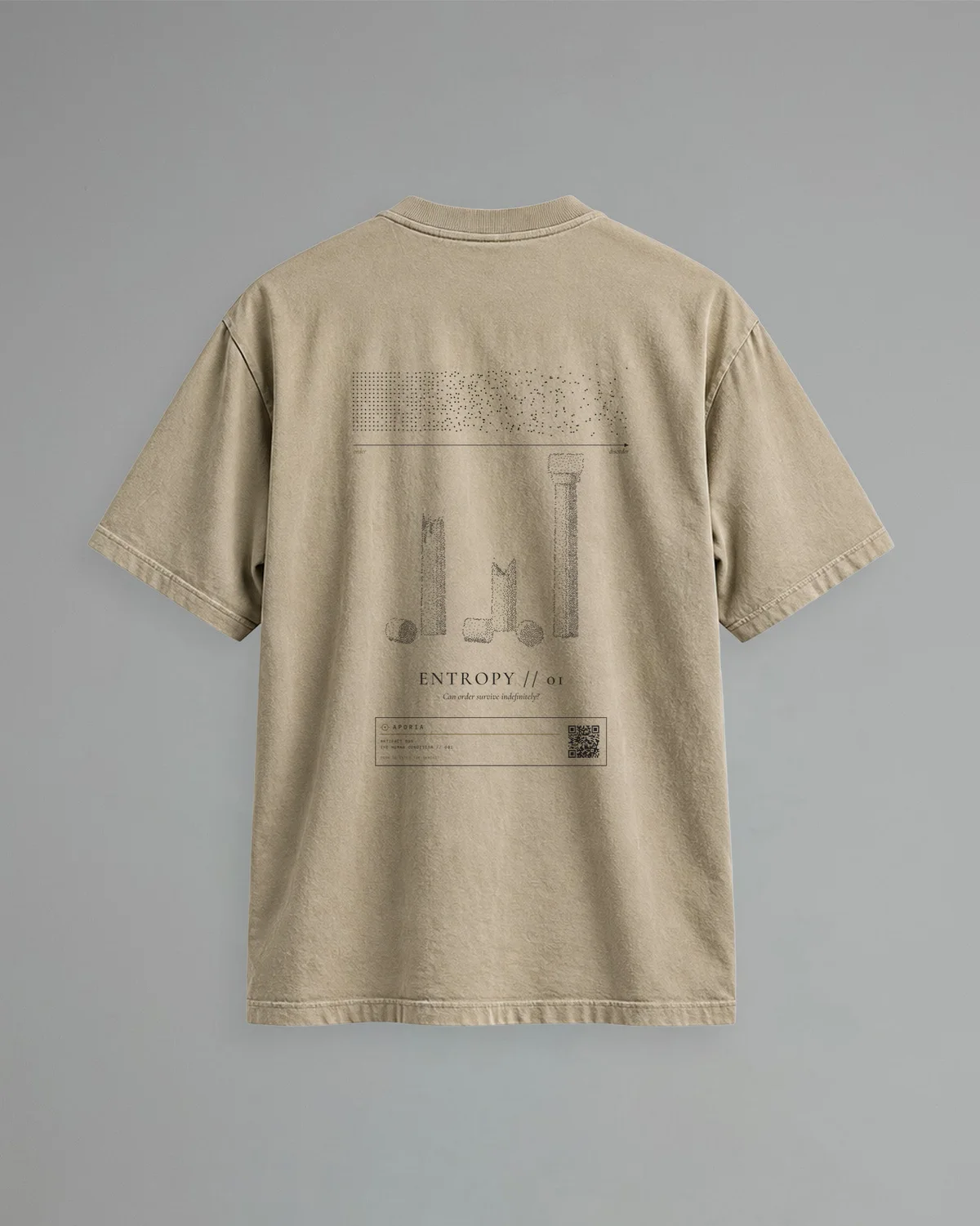
The physical artifact
Printed large on the back. Marked small on the chest.
Heavyweight 7.5 oz garment-dyed cotton in a slightly oversized fit. The museum placard under the artwork carries a permanent QR code that opens this artifact's exhibit.